20 September 2019

8th Education International World Congress, Bangkok, Thailand


The 8th. Education International World Congress that was held in Bangkok, Thailand were divided into the pre-congress sessions which ran from 19 – 21 July 2019 and the congress which ran from 22 – 26 July 2019. There were three main caucuses for the pre-congress sessions, namely the LGBTI Caucus, the Further and Higher Education Caucus, the Indigenous People’s Caucus, and the Women’s Caucus.

At the LGBTI Caucus, various issues were raised including the need for acceptance, awareness, and equity of LGBTI in schools, particularly in how the students and teachers who belong to the community are treated. There have been cases of bullying and discrimination in some countries while there were also success stories shared by some. The concept of Intersectionality was also introduced where participants were reminded of the many layers or Intersectionality that one has. In more conservative and religious countries like Malaysia, it is more important to advocate for the basic right of the LGBTI community to be treated respectfully without discrimination.

For the Further and Higher Education Caucus, discussions revolved around the threat of neoliberalism, political and corporate interference into higher education which privatization and commercialization. Due to lack of funding allocated by governments, many institutions of higher learning resort to precarious employment, which in return affect the bargaining power of the precarious staff, and also the quality of education and research. Various strategies were shared on how to address the issues raised including strengthening the network of unions.

The Women’s Caucus kicked off with a forum where 2 guest speakers spoke of their own experiences and aspirations as women leaders in the region: 1. Rashidah Shuib of the Asian-Pacific Resource & Research Centre for Women, who is also from Sister in Islam. 2. Sai Jyothirmai Racherla, also from the Asian-Pacific Resource & Research Centre for Women.  The day continued with various parallel roundtable sessions covering topics such as women and leadership, regional perspective of women unionists, and resolutions through a gender lens.

The congress went on for 5 days from 22 July to 26 July where 1400 educators from across the globe convened with the theme “Taking the Lead”. The president, Susan Hopgood called on all members to take the lead in bringing about changes so that education is made available and accessible to all. Among the main themes that were highlighted throughout the 5-day congress were neo-liberalism being a threat to democracy, Intersectionality, the importance of union renewal and succession through younger unionists, equity in education as a basic human right, social justice, women & leadership, and climate change. It was highlighted throughout the congress that the Sustainable Development Goal (SDG) 4: “to ensure inclusive and equitable quality education and promote lifelong learning opportunities for all” has not been achieved in most if not all countries, and that all parties especially governments are urged to ensure that the goal is achieved.

A total of 41 resolutions, either pertaining to constitutional amendments or current urgent actions, were presented at the congress where some were passed while others rejected. GERAK was entitled to 2 votes for the resolutions where we exercised our rights in voting for (or against) the resolutions. While many of the resolutions presented were on universal education rights, two particular resolutions relevant to GERAK’s aspirations were “Academic Freedom in Higher Education” and “Safeguarding Academic Freedom in Higher Education and Research”. On behalf of GERAK, Dr Lai Suat Yan and Dr Yuwana Podin went on stage to show solidarity with two urgent resolutions on academic freedom and democracy in Djibouti and Hong Kong.

Throughout the congress, all three representatives, Dr Lai Suat Yan, Dr Ngo Sheau Shi, and Dr Yuwana Podin of GERAK have been very active in participating in discussions of various topics in the different sessions. Dr Lai Suat Yan was invited as one of the speakers in the session “Teachers as autonomous professionals” and a moderator in the session “No to Harassment at Work”. Dr Ngo Sheau Shi was actively participating in discussions and even helped to prepare statements in supporting some of the resolutions. Dr Yuwana Podin, being GERAK’s principal delegate this time, was appointed as one of the election committee members representing the Asia-Pacific region in overseeing the executive board member election process. She also participated in the election process.

In terms of networking, Dr Lai Suat Yan is exploring with David Robinson from the Canadian Association of University Teachers possible capacity building workshops in relation to deep organizing or engaging others to join GERAK and academic staff associations. In addition, a possible workshop is to build activist skills in terms of bargaining, filing grievances, creating attractive visual materials, making effective smartphone movies and communicating through the media which we, GERAK exco, could be co-trainers. Another possibility is a workshop on equity and diversity. This will be presented to the GERAK exco for consideration in the coming meeting in August. Dr Lai Suat Yan and Dr Dina Bacalexi (FERC-CGT, France) met during the Congress to firm up the idea for a panel on sexual harassment for future sessions. The panel on sexual harassment was first initiated at the 12th Further and Higher Education and Research Conference in Taiwan. Dr Ngo Sheau Shi, Dr Yuwana Podin and Dr Lai Suat Yan are also currently working on a joint article tentatively titled “Challenges and Strategies Forward in Reclaiming Higher Education in ‘New’ Malaysia” for the special bilingual version of the French magazine "La vie de la recherche scientifique".

All in all, it was a valuable 8-day congress where many networks were established, gaps bridged, friendship made, and strategies plotted in pushing for academic freedom in Malaysia.


 Yuwana in the EI election committee

 Malaysian delegation: Ngo Sheau Shi (GERAK), Lai Suat Yan (GERAK), Rashidah Shuib, Yuwana Podin (GERAK)

 With comrades from Hong Kong

Sheau Shi with the EI president, secretary and past secretary

 Suat Yan moderating a session

Yuwana supporting a motion

15 September 2019

Copyright Issues and Teachers' Dilemma in Asia Pacific


Robert Jeyakumar
World of Education, 13 September 2019

I woke up in Budapest on a fine summer morning to deliver a lecture using materials I had prepared in Malaysia in accordance with copyright exceptions allowed in Malaysia. Just before the lecture, I was informed that my materials did not conform to copyright laws in the EU. Dismay! This was just the beginning of my series of lectures, I still had to deliver lectures in Poland, the Czech Republic, Germany, and the UK. I began to wonder how many versions of the lecture materials I had to prepare. Cross-border education in the 21st century should allow greater mobility and copyright exceptions for both printed and digital works, no?
The World Intellectual Property Organization (WIPO) Asia-Pacific Regional Seminar was held in Singapore on the 28th to 30th April 2019. I took part in the event as a member of the EI delegation to express our teacher concerns on copyright issues. Among the objectives of this seminar was to gather views from teacher unions on copyright exceptions for education. In 2017, the World Intellectual Property Organization (WIPO) commissioned a study to analyse copyright laws in the 191 WIPO Member States. One of the main objectives was to understand how copyright laws create barriers or support the work of teachers and how countries protect educational exceptions from contractual and technological overrides. Education International advocates that when the law allows educators to use digital works, they should not be prevented from doing so; however, this remains a challenge for educators from most WIPO member states.


This could also interest you

Credits: Ashraf Saleh / Flickr

Democratising Knowledge: a report on the scholarly publisher, Elsevier

Read More

During the seminar, WIPO provided several questions to be answered by representatives of states and civil society groups. They included which types of materials are used by educators, which educational or research activities they undertake and whether they engage in cross-border activities on online learning platforms. Topics that were superficially addressed were digital locks and the use of digital works that are often neglected in national copyright laws. The following paragraphs are from notes used by teacher groups to answer the three fundamental questions on copyrights and their impact on teaching and learning. 
Diversity of teaching materials and activities needs to be considered
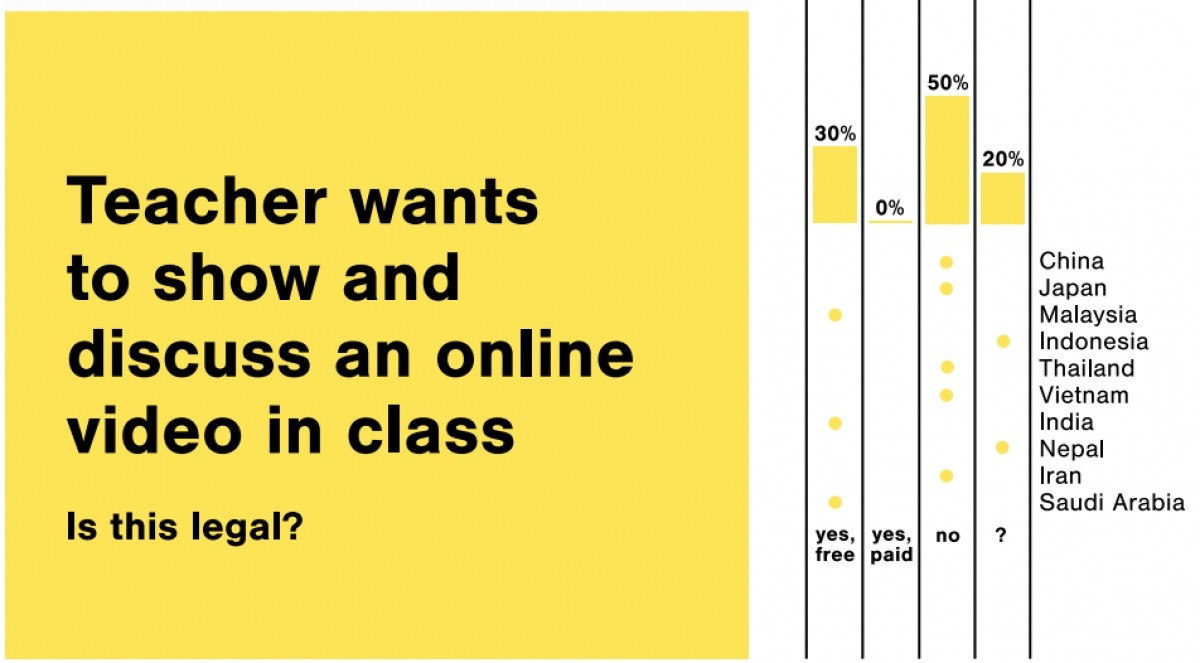
The role of the teacher is to make education informative and engaging. Hence, teachers use materials accessible to them for teaching in and out of classrooms. The classroom itself should not be inferior to the living room of a student. If a student can watch a YouTube video from her SmartTV at home, why can’t her teacher show a YouTube video in class? As can be seen in the infographic below, these are big challenges in the Asia-Pacific region. In addition to the traditional act of making copies of printed materials for teaching, teachers are increasingly using digital works in education. These include online videos from YouTube or social media sites, taking a picture of a diagram in the textbook and sharing it with student groups via Instant Messaging Apps such as Whatsapp. The nature of teaching and learning in the age of the Fourth Industrial Revolution has changed dramatically; the current students who are “digital natives” learn more effectively in a hybrid learning ecosystem that capitalizes on both physical and digital tools.
Source: Teresa N., (2019) Copyright and Educational Activities in Asia-Pacific. Education International.
Digital locks are a major barrier to teaching and research
Technical Protection Measures (TPM), also known as Digital Locks, may create obstacles in countries where the copyright laws do not foresee the right to use materials protected by such digital locks when the use is made under an educational exception. For example, Malaysia has a very broad educational exception, which covers many of the different educational activities of teachers, but the exception is of little use with regard to digital materials if the materials are protected with digital locks. In such cases, the digital locks may simply override the education exception. The circumvention of TPM blocks the exercise of the right to education copyright exceptions in Malaysia.
Cross-border research and teaching activities are a reality!
The future landscape of education is one that is mobile and beyond national boundaries. Relating to my own experience delivering lectures abroad, teachers may experience similar problems while giving lectures based on their own material in foreign countries, as the works used which had the copyright cleared in the home country may not be cleared abroad. Teachers and students may not be able to collaborate across borders because their copyright laws differ and, therefore, may not be able to exchange materials or us them as required for collaborative work (e.g. adding subtitles, doing translations, etc.). Several means of communications, including email, instant messaging and cloud services, are also not yet included in copyright exceptions.
Teachers and learners may face problems in obtaining material from abroad because of geo-blocking of online content. Educational institutions developing distance learning courses may not be able to offer their courses across borders because they cannot clear the rights on all the materials used in every country of the world. The web streaming of an academic conference also raises copyright obstacles because the educational institution cannot universally clear the rights of the copyrighted materials shown in the conference. The use of copyrighted material may be subject to a license, and the license may not cover the territory where the teachers want to use the material. Such modern educational practices are increasingly common in academia in Malaysia and in the Asia-Pacific region.
These restrictions on education raise an overwhelming need to relook at the copyright exceptions for education. This is essential for quality teaching and research as recognized in the internationally ratified UNESCO/ILO recommendation concerning the status of teachers and the UNESCO recommendation concerning the status of higher-education teaching personnel, teachers need to have the academic freedom and professional autonomy to choose and adapt teaching and learning materials without being restrained.
We need an international instrument such as the draft Treaty on Copyright Exceptions and Limitations for Educational and Research Activities (TERA) to promote national level reforms and establish minimum standards as well as legal clarity for cross-border education collaboration and exchange. Therefore, my organisation, the Malaysian Academic Movement (MOVE) voted for a global teacher union resolution on this topic at EI’s recent World Congress in Bangkok.  The current educational realities are complex, and a balanced approach to copyright is urgently needed; one that will free teachers to do what they do best – Teach without Restrictions!

8d777f385d3dfec8815d20f7496026dc1451.png

Dr. Robert Jeyakumar

Robert serves as the Assistant Secretary General for Malaysian Academic Movement (MOVE), an EI member organisation that promotes quality education, academic freedom and autonomy in Malaysia and in the region. He is a Senior Lecturer at the Faculty of Business, Multimedia University, Malaysia.

30 August 2019

GERAK Media Statement 28 August 2019

WE refer to the 20-page statement by Professor Philip Alston, the UN special rapporteur on extreme poverty and human rights, on August 23. The report’s conclusion that our national poverty line is too low, leading to gross underestimation of poverty, has been widely reported. 
Alston also criticises the lack of access to data collected by public funds, which has precluded research that can inform policymaking and help lives.
Alston pointedly notes: “Unlike the great majority of similarly situated countries, Malaysia does not provide full access to key household survey microdata, stifling both governmental and independent research and analysis on poverty and inequality”. 
This UN document lends urgency to a problem that has plagued academic research for decades. Malaysian researchers, in academia and beyond, have had to painstakingly request data, and are at the mercy of federal officials.
In Malaysia, researchers face prohibitive obstacles to obtaining public data from both federal and state government agencies.
Even when granted access, often only selected portions of the datasets are provided, not meeting the requirements of the research project. 
Malaysia is blessed with an abundance of data. Publicly funded surveys, mainly conducted by the Department of Statistics, provide immense resources that can be analysed for the public good. 
Malaysia compiles data on demography and population, manufacturing firms, agriculture and plantations, the labour force, household income, and a host of other fields.
The breadth, national representation, sample size and regularity of these datasets are unmatched by any research project. These datasets hold a wealth of potential information and insight, and are immensely useful for social science research and policy solutions. GERAK commends the government’s commitment to open data, initiated in 2017. We gratefully acknowledge the constructive work and forward-looking attitude of government departments, notably in operationalising the public data hub data.gov.my.
However, there is tremendous room for improvement. 
In this regard, GERAK calls on the government to honour its commitment to make public data accessible for research in an open and complete manner. 
Researchers require raw data to conduct original, meaningful and impactful research – that is, data that has not been processed, converted or summarised.
The “open data” page of the Department of Statistics currently does not provide access to raw data for research, in line with open data principles. It provides only statistics that are already aggregated and summarised by DoS and other agencies. 
The shortfall is particularly acute in some areas of national importance, including household income and expenditure, labour markets, firm-level surveys and environment.
We urge the government to make robust and comprehensive progress in the open data initiatives under way. 
In making national survey data accessible, we urge the government to uphold three principles in formulating new laws and regulations:
1.    Completeness: Malaysia’s open data policy should encompass datasets across the spectrum of sectors and issues, to be provided in full. 
2.    Original form: Researchers need raw data in order to generate new information and fresh insights, in order to contribute to public knowledge. Concerns over privacy can be mitigated by anonymising datasets, while retaining important variables such, as location, gender and ethnicity.
3.    Accessibility: We commend the progress of placing data online, specifically through data.gov.my, and look forward to further expansion. We urge that large datasets be placed in the public domain free of charge, to catalyse research and broaden participation in policy analysis. Moreover, data collection costs have already been defrayed by public funds, and online platforms incur minimal expenditure. 
Members of academia are partners, with government and society, in creating public knowledge. In increasing public knowledge, we are bound by professional ethical standards. 
GERAK trusts and hopes that, through application of the three principles above, Malaysian researchers will be able to access public-funded datasets, to contribute to our nation’s development.

11 August 2019

Press Statement: Appointment of UMS vice chancellor

The recent – and evidently ongoing – storm surrounding the selection of the vice-chancellor of Universiti Malaysia Sabah compels Gerak to issue this statement.
For Gerak, it is clear that this appointment embodies issues of autonomy and accountability. These are issues about which Gerak has consistently expressed concern, and which the Education Ministry under the Pakatan Harapan (PH) government has acknowledged.
The current controversy surrounds the appointment of Taufiq Yap Yun Hin as the new vice-chancellor.
Taufiq is a chemist, a fellow of the Royal Society of Chemistry, United Kingdom. 
And, unimportant as it should be from an academic perspective, he is Sabah-born and the first ethnic Chinese Malaysian to be appointed vice-chancellor of a Malaysian public university.
There are now false allegations circulating that he was selected by Education Minister Maszlee Malik, without consultation and he was selected because of his religious leanings.
The selection of vice-chancellors has changed – though not fast enough – since the days of the BN. 
Inputs from various academic organisations, through written proposals and even a widely-reported town hall meeting in Universiti Malaya on July 23, 2018, have contributed to this change.
Taufiq’s appointment was not made solely by the minister but on the recommendation of the new, autonomous Education Ministry Vice-chancellor Selection Committee that vetted and interviewed all the candidates on the basis of academic merit. 
Scholarship and intellectual leadership/vision were core criteria.
Gerak knows of the quality and integrity of individuals in the committee and stands by their decision. We also know that various UMS organisations, including their academic staff association, PSAUMS, are fully supportive of Taufiq’s appointment.
As for Taufiq’s religious inclination or background, what he does in his own time, as long as it is within the law and also within the terms of his tenure, really should be of little concern to us all.
It is what he will do for UMS as an intellectual leader – and there is certainly much to be done – that should matter to us now.
UMS, as most of us are painfully aware, is coming out of a period of much internal conflict and turmoil that have little to do with academic excellence and a lot to do with power relations and political interference under the old regime.
Employability figures for UMS graduates currently are very low – at about 61 percent. Hence, perhaps it would be better for us to support the new independent leadership in UMS, to reform UMS to be among the best.
In this regard, we certainly believe that regional universities should be in constant communication with state governments, and, indeed, the wider community, including civil society organisations and industry.
But, public universities are federal entities that must be run on the basis of the best academic leadership available.
Recommendations for vice-chancellors and chairpersons from local politicians, like chief ministers, are welcome but these candidates must meet the high standards now being set by the independent Vice-chancellor Selection Committee.
These political leaders would do less harm by running their states and constituencies than by interfering in the running of our universities.
Gerak's stand is that political considerations must never be the criterion for the appointment of vice-chancellors. 
This, we strongly suspect, is one of the major reasons why university leadership – and Malaysian public universities on the whole – failed to move far enough forward under the BN regime.
The Harapan government evidently wants to change all this. It wishes to reform public universities; to try to make them world-beaters. This is not going to happen overnight.
But it would happen much sooner if political leaders were to embrace the new thinking of Maszlee and the Harapan government as regards merit-based appointments to top university positions.
Indeed, in this age of globalised knowledge and progressive thinking, it is time to discard our old parochial ways and think wider.
In the case of UMS, suffice it to say, the best was appointed – from a list of shortlisted candidates all of whom were Sabahans.
We could, of course, indulge in this tired and tiring post-GE14 game of griping and sniping. 
Or we – inside and outside UMS – could rally behind the new vice-chancellor and not undermine him without reason. For the sake of progress and development in UMS and in Sabah. 

09 August 2019

Times Higher Education

Kowtowing to politicians is shameful and wrong

If universities don’t assert their expertise, demands from ministers and industry will become ever more misguided, says Dawn Freshwater
August 8, 2019
slaves on ship
Source: Getty
We’ve all heard, again and again, about the importance of supplying the world with students who are “job-ready”, in a world where roles appear, disappear and change all the time. But what does that really mean? How should we approach that task – if at all? And who is in the best position to decide?
Universities were traditionally in the business of introducing students to the canon of human learning and creativity. But one issue is what constitutes the canon in the 21st century. Even beginning the list is intimidating because we are instantly alert to which subjects have been included and which have not. The Bible? Shakespeare? Freud? Marx? Foucault? But these don’t even scratch the surface.
How we would love our students to study everything – to be the broadest of broad thinkers, to be scientists who understand literary allusions and arts graduates who can understand trinomial equations. But we don’t have the time to create such graduates – and they would insist that they don’t have the time either.
Some critics object to our spending any time teaching all that “theoretical stuff”. Others counter that nothing is more important than teaching students to think – sometimes said in a manner that suggests that thinking would never occur without academic training, or that it has nothing to do with knowledge.
Since we cannot assume that those who make political and economic decisions understand or care about the roles and capacities of universities, I strongly suggest that it is incumbent on us to educate them on the subject, and that we do so rigorously and insistently.
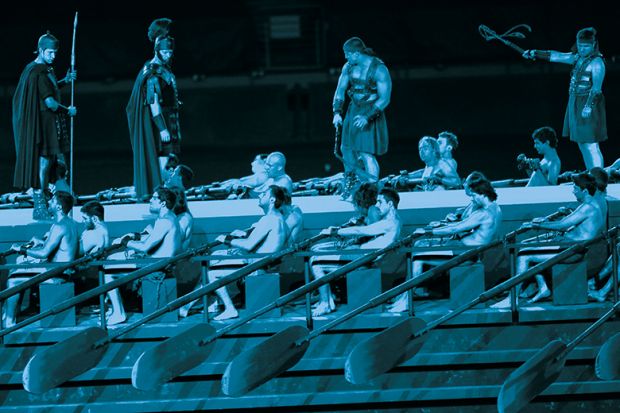
The alternatives – asking politely what they would like us to do next, or apologising for failing to please – have certainly been tried in our long tradition, but they were both shameful and wrong. Universities that devote themselves to placating those who insist on their churning out graduates able to slip instantly into whatever workplace they happen to be running, will become – like all who placate – mere servants. And those they serve will become more and more demanding masters, ordering them not to waste their time on anything that doesn’t obviously serve whatever they believe to be in their own immediate self-interest.
Universities have served their societies honourably and well. But if we want to have any meaningful say in what we teach and how we teach it, we will have to talk like the masters – of arts, science, engineering – that we undoubtedly are. We must speak with the authority of knowledge, in all its complexity and with full awareness of how swiftly and exponentially it grows. We’ve earned the right.
Our towers stopped being ivory ones a long time ago. They are lookouts. We see the world at our feet – the little and medium-sized towns universities have become – and we see the world beyond. We understand the pressures of the 21st century. I’m suggesting that we make the 21st century work for us, dictating its tone rather than letting it force us to adopt approaches that we know are counterproductive.
Only those who live and work in universities know the vastness of their possibilities. We know that we can do more for our societies than the politicians and captains of industry can imagine. We should listen carefully to suggestions and requests, but never mistake them for orders. Our responses must be narratives of our own – shaped by our own understanding, experience and knowledge.
I include our students in this “we”. Universities are communities of scholars, who educate best when they educate inclusively – when students do research with guidance, helping to shape our understanding of what we do and what we should change.
As scholars, we create and re-create our canon, and we have always done so. Despite cherishing their liberal, “enlightenment” values of free enquiry, traditional universities had no problems excluding women as people incapable of conducting research. But when, more recently, our students complained that we were teaching “white culture”, we listened. When they told us to stop using terms such as “mankind”, we listened. When they wondered where gay people were and questioned our use of terms such as “race” and “disability”, we listened.
This social, political and cultural disciplining of universities, largely from within, forced us to look and think again. The result was an enormous increase in the intellectual potential available to study a much wider range of issues and problems.
We will continue to discipline our disciplines – and we’ll do it honourably. But we must insist on remaining captains of our own ships, because no one else can steer them better. That way, 21st-century universities will continue to do what we all need them to do: thrive.
Dawn Freshwater is vice-chancellor of the University of Western Australia and Chair of the Group of Eight. This is an edited extract from a speech given at the World Universities Forum: Liberal Education for the 21st Century, in Dublin, on 24 May.

08 August 2019


Global campaign for academic freedom


In light of worrying global threats, the Malaysian Academic Movement (Gerak) affirms the critical importance of academic freedom for advancing and disseminating knowledge


On 21-26 July this year, over 1,400 educators and unionists from schools and institutions of higher education across the globe gathered at the Eighth Education International World Congress held in Bangkok, Thailand.
What was evident in all the congress deliberations is that, there have been many threats to academic freedom in recent years including state interference and repression, and pressures arising from commercialisation, privatisation, and managerialism, as reported by members of Education International worldwide.
In addition, the now-common practice of hiring academic staff on a contract basis was seen by almost all participants as a threat to the progression of scholars up the academic ladder. This is especially true of new and young academics.
At the national level, Gerak is deeply concerned with these developments. We see similar strategies being employed in Malaysian institutions of higher education and feel there is a need to push back.
Like the other members of the Education International congress, Gerak affirms the critical importance of academic freedom for advancing and disseminating knowledge.
Indeed, academic freedom strengthens democracy and contributes to the common good of societies, as outlined by the 1997 Unesco Recommendation Concerning the Status of Higher Education Teaching Personnel.
At the international level, it is clear that there is a need to intensify campaigns focusing on higher education and research, in particular those focusing on defending academic freedoms and developing partnerships with other international trade union organisations and NGOs.
Gerak believes that this is also crucial at the local level, especially in engaging with other local teachers’ and academic unions.
We must work together with local and international organisations. We must develop a pedagogic alternative that will liberate not only our minds but also our society. At a time when greed and the destruction of our world seems imminent, doing less is not an option.
Gerak Executive Committee
2 August 2019